

SAY Carbon Yachts Brings Automotive Engineering Excellence To High-Performance Day Boats
The SAY Carbon Yachts on-water experience is often likened to driving an Aston Martin on the road. Both enjoy proportion-led lines with few visual interruptions and a sense of controlled tension, though the key similarities don’t focus on design. The comparison draws on both builders’ use of lightweight carbon-fibre construction with quick acceleration, nimble handling and less power to achieve high speeds. Of course, these parallels are no accident, but the product of SAY Carbon Yachts’ chief technology officer Karl Wagner’s two decades of carbon-fibre composite expertise within the automotive industry. After founding Carbo Tech Composites in 1993, Wagner built the company into one of Europe’s leading manufacturers of lightweight carbon-fibre components. Its clients included Aston Martin and Porsche, as well as Formula One teams and Le Mans race cars. It ultimately became responsible for industrialising all carbon-fibre monocoque production for McLaren’s road-going sports cars. When Wagner sold the company in 2014, he moved his automotive engineering expertise into boatbuilding, bringing the spirit of lightweight design and software solutions within carbon-fibre technology to the forefront of SAY Carbon Yachts’ offering.
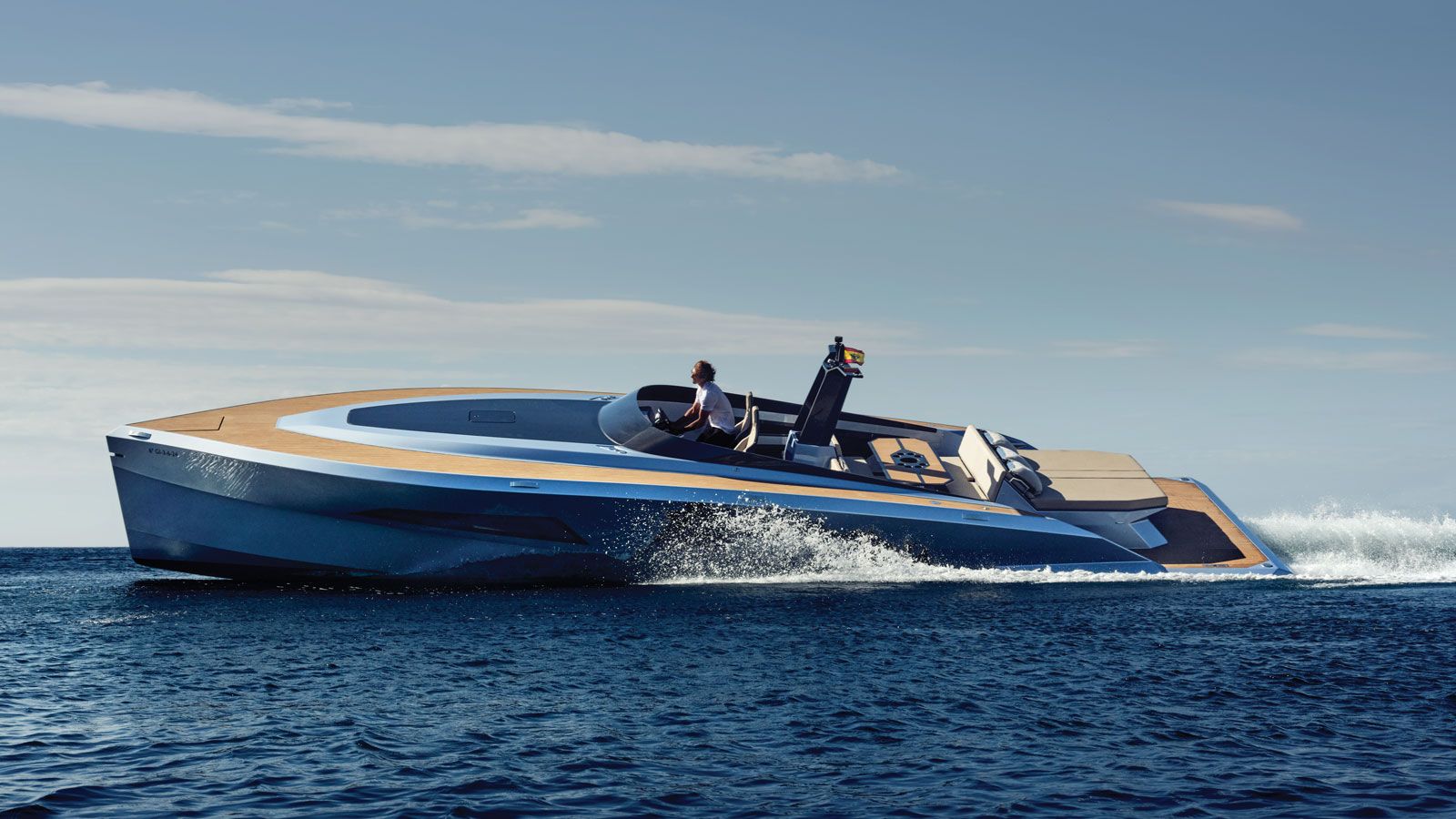
The use of carbon fibre is one of SAY’s key differentiators compared to other composite boat builders. It means its models are substantially lighter than other boats of the same size, which in turn leads to better performance and acceleration, superior cornering and increased efficiency. Sven Ackermann, SAY Carbon Yachts’ founder, was already using carbon fibre to build sailing yachts and motorboats but without any clear direction. Wagner decided to double down on motorboats and refine that further to day speedboats. It was a radical decision, but one necessary to push the company towards lightweight precision and acceleration without losing core customers. For speed enthusiast Wagner, there is no better ride than the company’s discontinued SAY 29. The ergonomics were no good, there was no onboard storage, and the team quickly learned what was necessary to make a great family boat without compromising on lightweight design. Key to that learning was the inclusion of stabilisers, a necessity for luxury and comfort. At the beginning, Wagner really hated stabilisers because they’re heavy and require batteries, but he soon learned that they’re extremely necessary for the entire family to spend a perfect day on board.
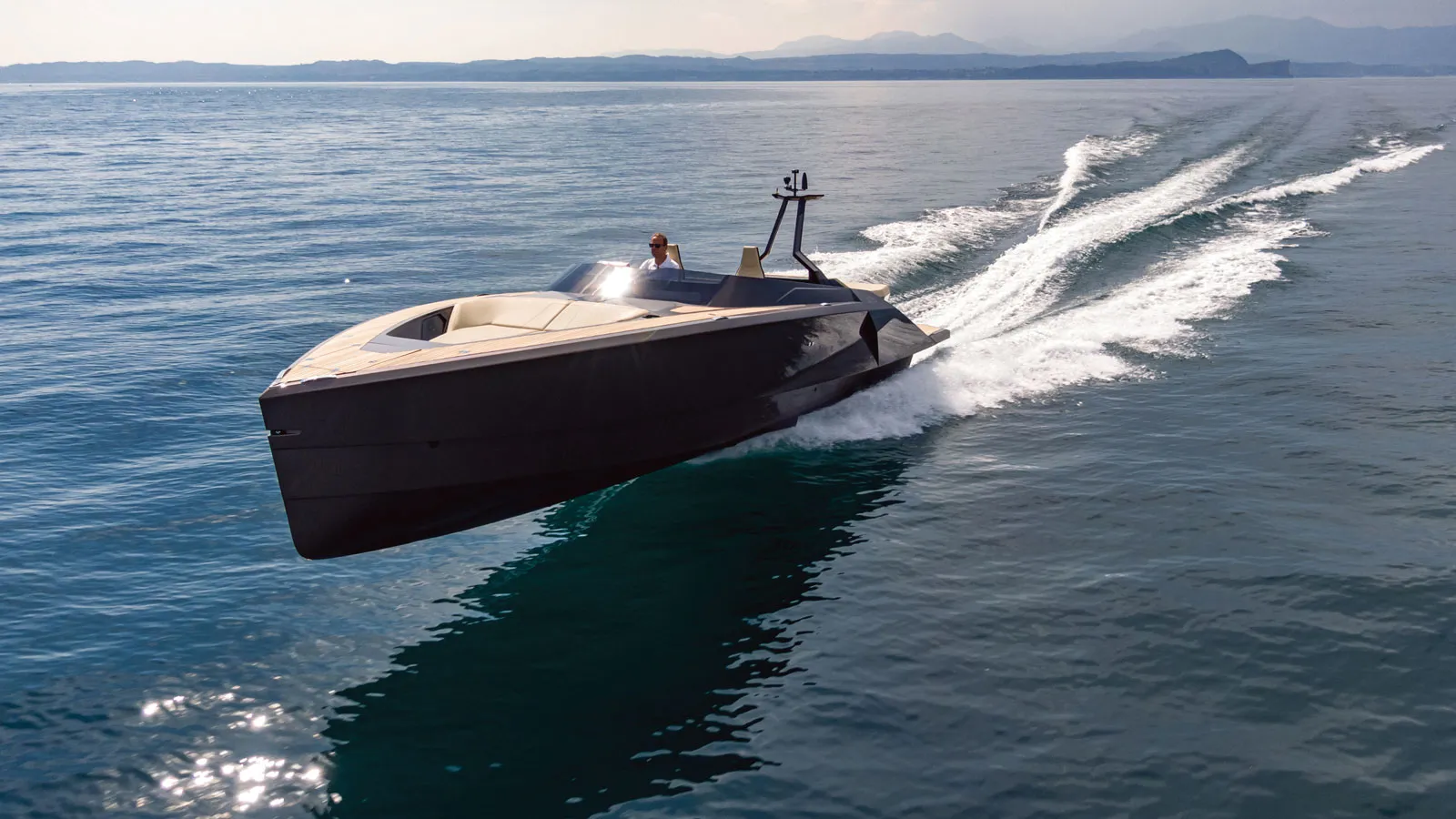
Much of the design is carried out in-house in partnership with Munich-based Genesis Design Studios, which brought a high degree of detailed technical design to the company’s latest release, the SAY 32. It reaches top speeds of around 50 knots yet burns just 1.6 litres of fuel per hour, less than half that of its competitors. It’s thanks in large part to the patented Petestep hull design, which uses specialised deflector steps to reduce spray and drag, while the extreme rigidity of the carbon-fibre hull allows the boat to carve through turns with minimal flex. You need smart solutions, and Wagner loves smart solutions, but for him as an engineer, every improvement always tracks back to weight. A lighter boat means smaller engines, which consumes less fuel, requires a smaller tank and so on. It’s a positive cycle. Perhaps the strongest Aston Martin parallel is that 50 knots doesn’t feel frantic. Owners often describe the steering as unusually direct for a yacht, giving the helmsman confidence at speed. Over the past year, the benefits of the German builds have filtered into the superyacht sector, with owners often desiring them as chase boats, as well as the occasional tender.
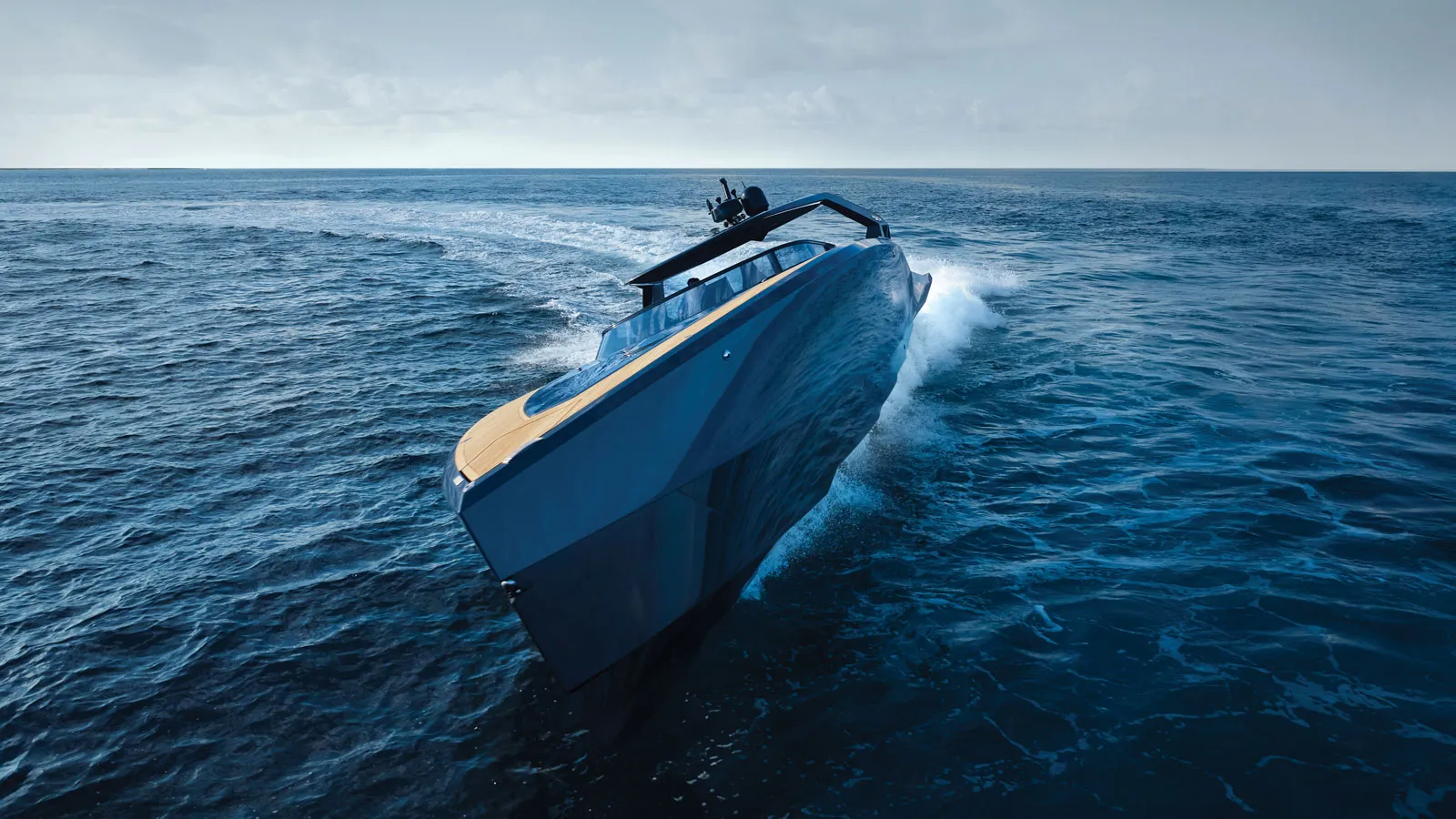
The lightweight build makes them suitable for towing, while a recent switch from gasoline to diesel engines means they can be safely stored on board the mothership. The sustainable benefits of lightweight production haven’t gone unnoticed, either. Wagner, who aims to build 25 boats per year, carried out a lifecycle analysis on the SAY 52, the company’s largest model to date, that showed a 50 per cent reduction in lifetime CO2 emissions compared to other boats of the same size. Fuel consumption still accounts for 90 per cent of a boat’s total CO2 footprint over a lifespan of 30 years, including production and disposal, which is why SAY is focused on keeping engines small and boats lightweight. Including the diesel engines, generators, air conditioning and stabilisers, the SAY 52 weighs just eight tonnes. The company is also looking into hybrid propulsion solutions and has started using bio-based epoxy resin, though the main thrust of innovation remains with carbon fibre.
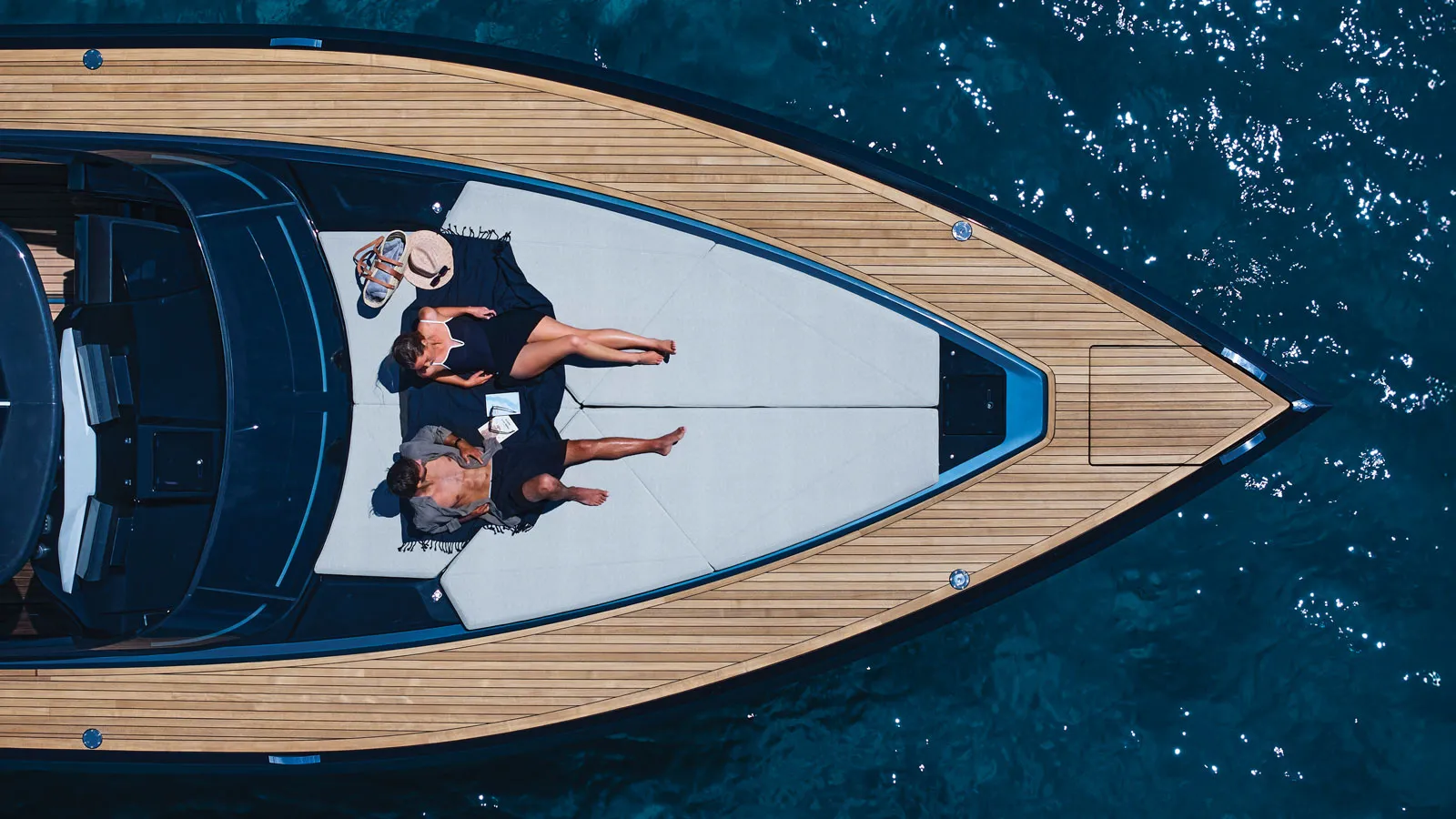
The hardtop on the SAY 52 is huge, a rigid structure around six metres long, weighing 150 kilograms and only supported by two posts. It really shows the engineering capabilities when using carbon fibre, and how advanced technologies are expertly integrated to achieve optimal performance without compromising on aesthetics. For those interested in experiencing these innovative speedboats firsthand, SAY Carbon Yachts welcomes inquiries about their full range of models and custom build options. Visit https://panaceayachtgroup.com/exclusivelistings/ to learn more about available opportunities in the luxury speedboat market. #SayCarbon #LuxurySpeedboats #CarbonFibre #PerformanceBoats
This article has been sourced from press releases and cross-referenced with multiple websites. Facts originally seen at Source.